Hypocrisy is ordinary. Building a story to bury it is not.
A citizen-run record of the distance between what is claimed in public and what the documents show. Across government, corporations, public sector bodies and individuals, with no side exempt.
We exist because accountability in India now rests on the assumption that nobody will go back and check.
The Ministry of Hypocrisy is a citizen-run record of the distance between what is claimed in public and what the documents actually show, across government, corporations, public sector bodies and individuals, with no side exempt.
We are not here to produce outrage. We are here to keep the receipts, so that the next statement is read against the last one.
What follows is one page: five illustrated exhibits, then the sources for every figure in them. Scroll, and it plays.
Every claim here has a footnote. We publish the footnote. Four things on this page do something, and this is all of them.
- A red bar means unread. Each caption is filed under one, and your scroll lifts it. Watch this one go:
The bar has gone, so you have read this.
- A red chip is a source. Every figure carries one: publisher, date, and a link to the document. Tap this one and see.A chip reading SOURCE REQUIRED means we have the figure but not yet the primary document. It stays flagged until we do.
- A counter means there is more in this exhibit. The tall exhibits hold several readings and hold still while you scroll through them. The figure at the top right, 3 / 5, tells you which reading you are on.
- A note follows every exhibit. The Ministry’s note sets out the story in full, with the counter-argument where one exists, and a numbered marker to each source. Any figure found wrong is fixed, and the fix is logged here with the date.
Exhibit A · The Promise
Manufacturing was promised a quarter of the economy.“Make in India” promised manufacturing at 25% of GDP by 2022. The government’s revised series puts it at 14.8% — the same as three years ago.
Of the ₹1.97 lakh crore PLI outlay, about 15% had been paid out by December 2025, and the scheme won’t be extended.
Ministry’s note
In September 2014 the government launched Make in India with a stated goal: manufacturing at 25% of GDP by 2022, later moved to 2025. In August 2026 the government told the Lok Sabha that manufacturing is 14.8% of gross value added in 2025-26, against 14.7% in 2022-23, and that the data shows no significant change . The share on the old series was around 17%; the new base year lowered it. Either way, the needle has not moved toward 25.
The main instrument for moving it was the Production Linked Incentive scheme: ₹1,97,000 crore across 14 sectors. By December 2025, ₹28,748 crore had been paid out — about 15% — and Reuters reported in March 2025 that the scheme would not be extended or expanded . Manufacturing grew; its share of the economy did not. That is the gap this site is about: not that nothing happened, but that the number on the poster and the number in the accounts are different numbers.
Exhibit B · The Route
How an imported kit becomes Made in India.Route is illustrative of a mechanism documented by Indian customs (CBIC, 2020), not a specific shipment.
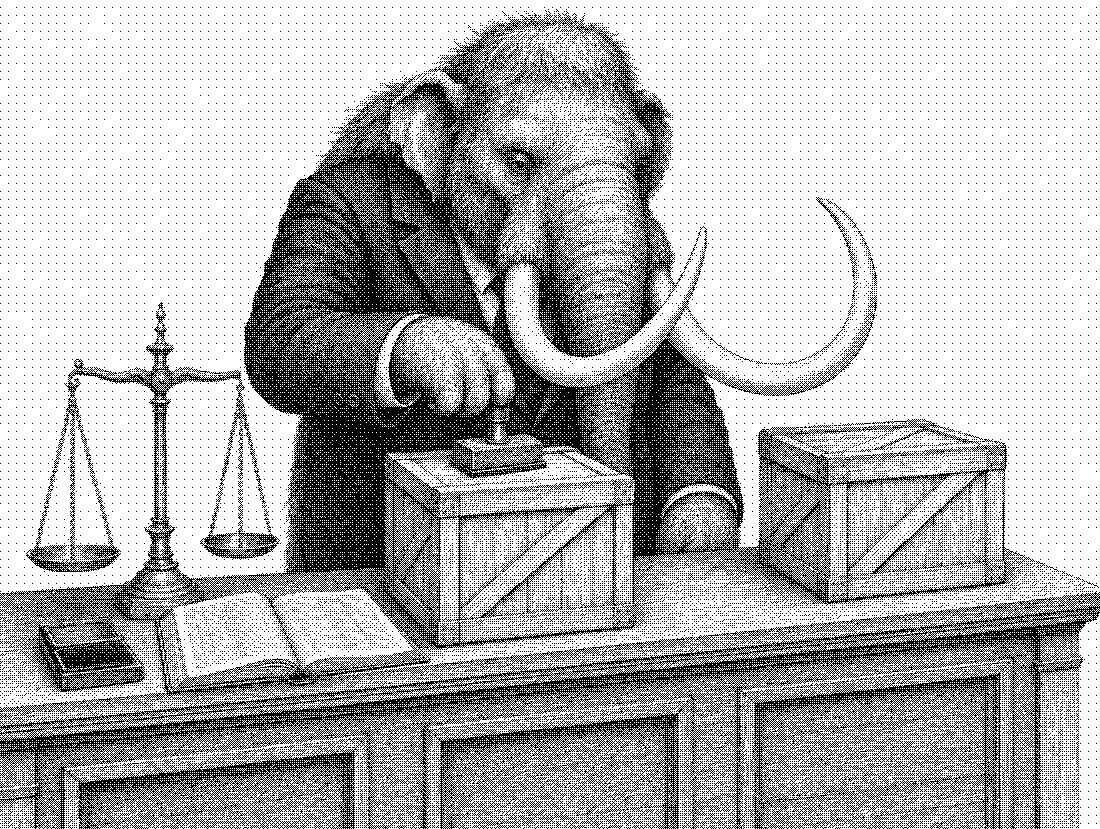
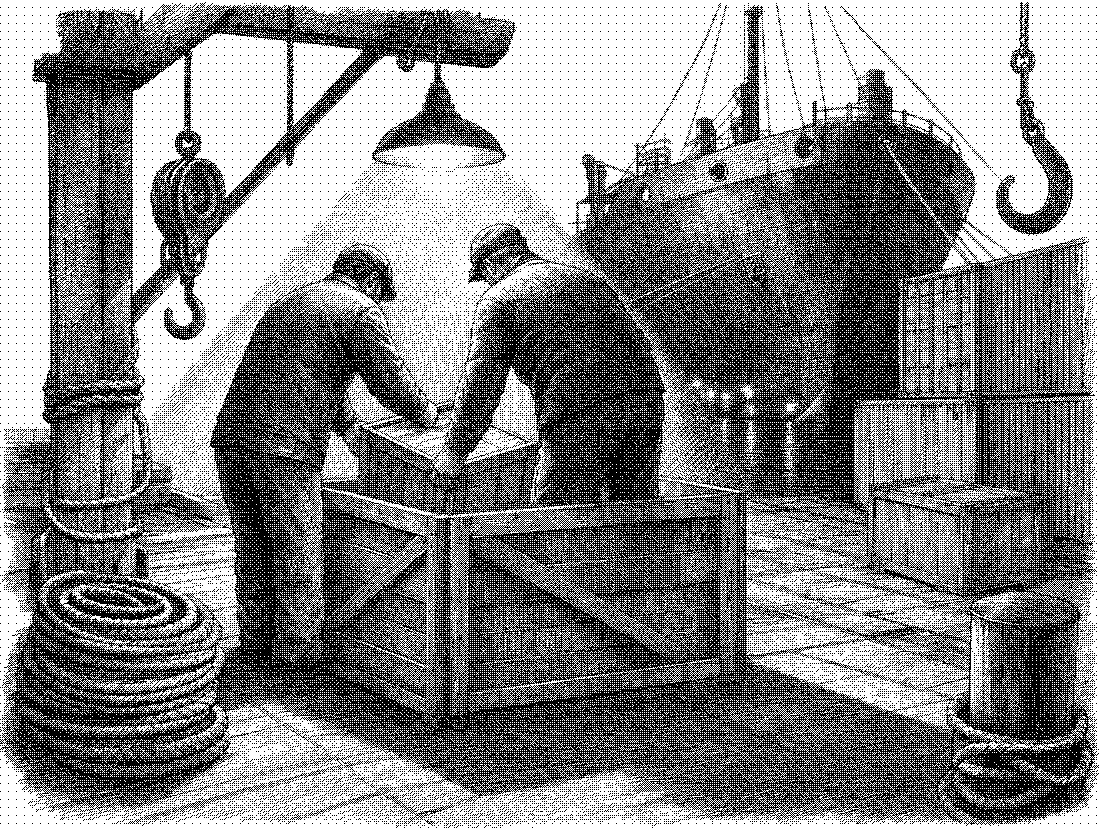
India’s trade deficit with China hit a record $99.2 billion in FY2024-25.
To claim FTA duty benefits, goods need roughly 35% local value addition. Customs found Chinese goods routed through ASEAN with only minor processing.
A fully built car pays 60–100%+ duty. The same car as a knocked-down kit pays far less. The tariff rewards assembly.
99.2% of phones sold in India are assembled here. Domestic value addition is about 15–23%.
There is no law that defines “Made in India” for a consumer product. Country of origin must be declared only for imports.
The ministry’s probe into false localisation cut FAME-II e-scooter beneficiaries from about 9.89 lakh to under 5.64 lakh; ₹469 crore was demanded back, later partly reversed, with an SFIO probe continuing.
Ministry’s note
This is not a story about one shipment. It is a story about a mechanism the government itself has described.
India’s trade deficit with China reached a record $99.2 billion in FY2024-25 . To claim lower duties under a trade agreement, an importer must show that goods meet origin rules, typically around 35% local value addition . In September 2020 customs officials said goods from outside ASEAN were being routed through ASEAN countries, given minor processing, and declared as 35% value-added — and described this as common in phones, TVs, set-top boxes and air conditioners .
Inside India the tariff does the rest. A fully built car pays 60% or 100% duty; the same car as a knocked-down kit pays 10% . The system is designed to reward assembly, and it does. Customs currently allege that Skoda-Volkswagen imported 97.8–99.7% of parts for 14 models and assembled them in Aurangabad; the company contests the ₹12,000 crore demand in the Bombay High Court . We do not know who will win. We do know the argument is about whether a kit assembled with a screwdriver is a car made in India.
The phone in your hand is the clearest case. 99.2% of phones sold in India are assembled here. The government’s own figure for domestic value addition is 22–23%, up from about 15% . The rest of the value — the chips, the display, the camera module — is imported, mostly from China. And there is no law that defines “Made in India” for a consumer product; the Legal Metrology rules require a country-of-origin label only on imports . A box assembled from an imported kit can carry the words legally.
When the subsidy was tied to real localisation, the FAME-II electric-scooter scheme, the government’s probe cut the count of eligible vehicles from about 9.89 lakh to under 5.64 lakh and demanded ₹469 crore back from seven makers . A ministry committee later cleared two of them ; the Serious Fraud Investigation Office searched three of them in December 2024 over ₹297 crore it says was “deceptively” claimed, and that investigation continues . We report all three facts because all three are true.
Exhibit C · The Leak
Who sells the exam paper, and to how many.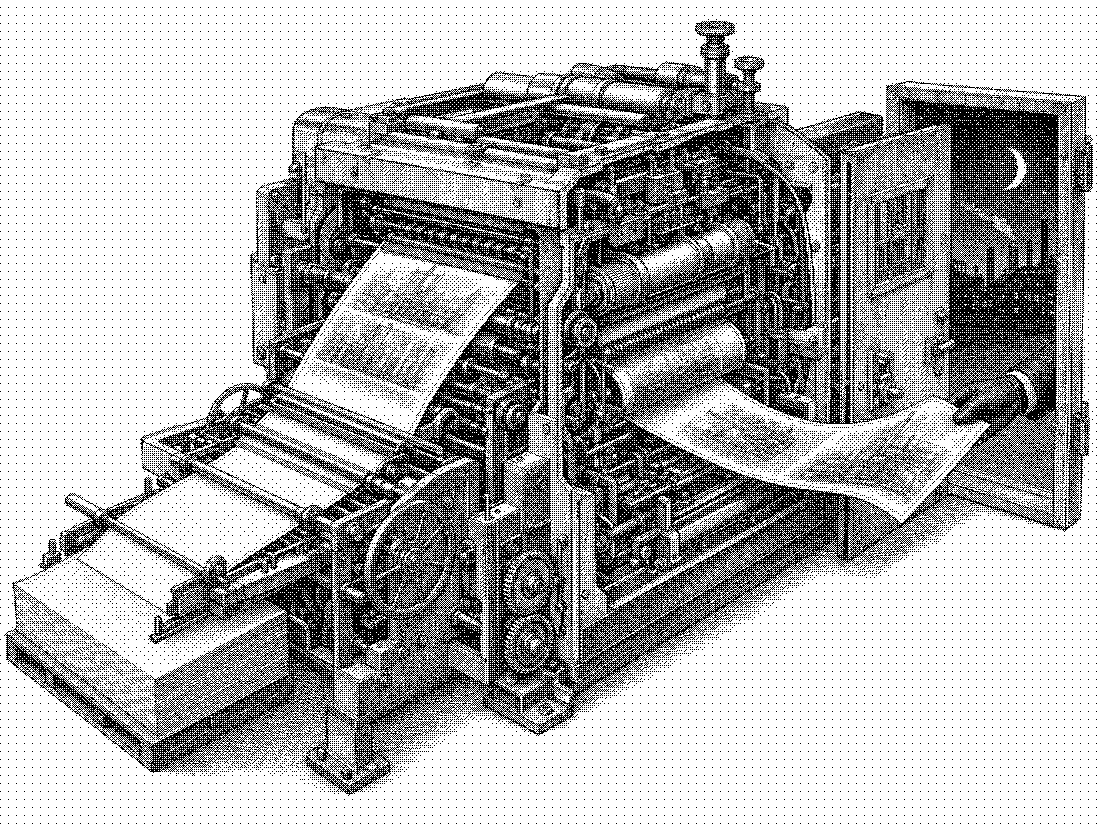
In one Rajasthan case the paper sold for ₹2 lakh per aspirant; nine were arrested, four of them ex-Army.
At least 41 paper leaks across 15 states in five years, touching roughly 1.4 crore applicants.
48.83 lakh people applied for 25,487 constable posts — about 192 for every seat.
The anti-leak law carries up to ₹1 crore fines and 10 years. As of September 2026 we found no reported convictions under it.
Ministry’s note
The Indian Express counted at least 41 recruitment-exam paper leaks across 15 states in five years, affecting about 1.4 crore applicants . In one Rajasthan Army recruitment case the paper sold for ₹2 lakh per aspirant; four of the nine arrested were ex-Army . This is a market, with a price.
The demand side explains the price. 48.83 lakh people applied for 25,487 constable posts in 2026 — 192 for each seat . When a government job is the only secure work available and the exam is the only door, the exam paper becomes the most valuable document in the district.
Parliament passed a law in February 2024 with penalties up to ₹1 crore and 10 years; it took effect on 21 June 2024, days after the NEET-UG leak . As of September 2026 we found no reported conviction under it. A separate analysis published by The Wire in June 2026 counted 148 exam-fraud cases and one conviction in 11 years under all laws . The law exists. The convictions, so far, do not. We will update this line the day that changes.
Exhibit D · The Consolidation
Two of everything.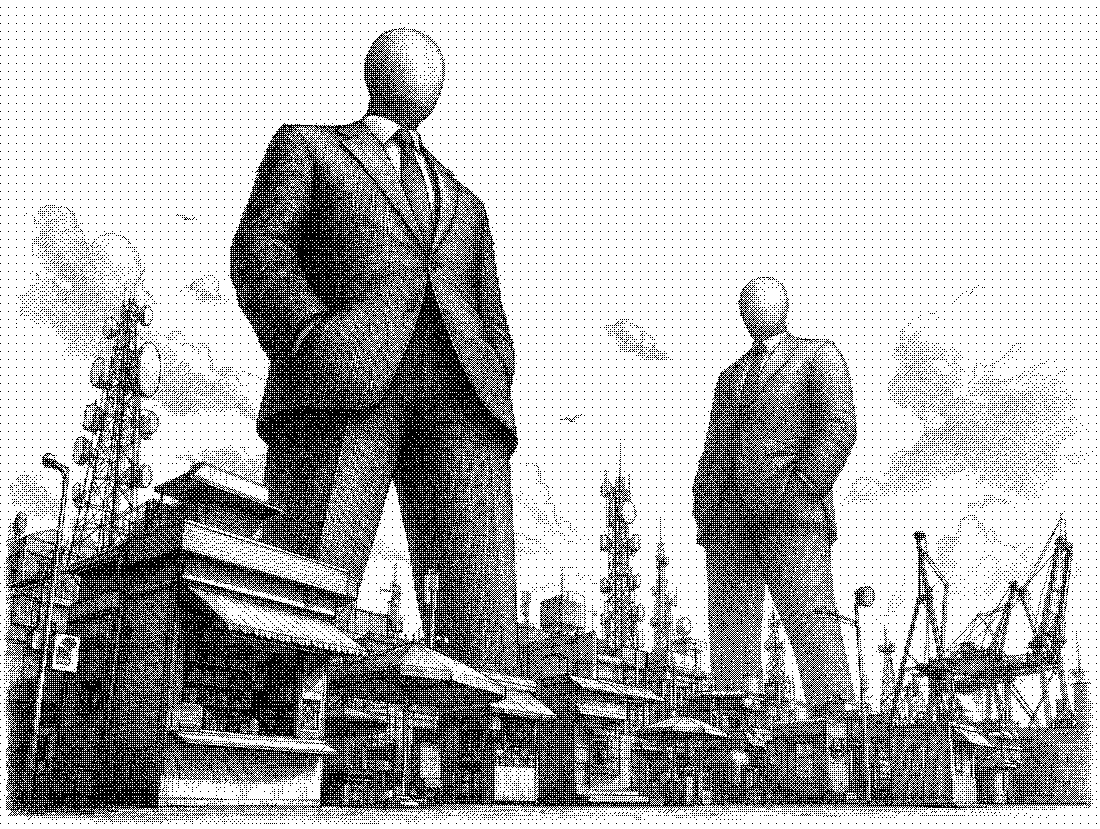
Two companies take over 80% of India’s mobile revenue.
The government told Parliament two airline groups hold 91% of the domestic market.
Adani Ports and SEZ handled about 27% of India’s cargo and 45.5% of its containers in FY25.
The top 1% held 40.1% of national wealth in 2022-23 — more concentrated than under the British Raj.
Exhibit D · Two of everything
Share of each market held by its largest players. Hatched: the largest one or two. White: everyone else.Different markets, different measures — revenue, subscribers, passengers, tonnes, wealth. The rows are not comparable with each other; each is comparable with its own past.
Ministry’s note
India has more than 1.4 billion people, four mobile operators, and, in practice, two.
In the quarter to March 2024, according to TRAI’s own performance report, Reliance Jio earned ₹25,331 crore in adjusted gross revenue and Bharti Airtel ₹20,952 crore. The other three operators — Vodafone Idea, BSNL and MTNL — earned ₹9,519 crore between them. Two companies took about 83% of the money . By October 2025 they had 75% of wireless subscribers , and by April 2026, 77% . Vodafone Idea survives on government equity conversions and court relief; BSNL began pan-India 4G in September 2025, years after its rivals launched 5G.
Aviation is the same picture with fewer decimals. In March 2026 the Minister of State for Civil Aviation told the Rajya Sabha that IndiGo held about 64% of the domestic market and the Air India group about 27%. Two groups, 91% . Jet Airways and Go First did not lose to better competitors; they collapsed, and their passengers were absorbed.
Ports: Adani Ports and SEZ handled about 27% of all cargo moving through India and 45.5% of its container traffic in FY25. Mundra, a private port, became the first Indian port to cross 200 million tonnes in a year . Cement: the top five makers held 54% of the market in December 2023, up from 45% in 2015 , after UltraTech and the Adani group bought most of the mid-sized companies that used to compete with them.
None of this is illegal. We want to be exact about that. There is no allegation on this page that any company broke a law to reach these numbers. Some of it is the ordinary result of scale: telecom needs spectrum and towers, airlines need fleets, ports need capital. Some of it is policy: spectrum pricing that drove out smaller operators, licence-fee disputes that hollowed out Vodafone Idea, privatisation of ports and airports that put public infrastructure in a small number of private hands. Some of it is simply that the weak died and the strong inherited.
The argument is about what it costs. Viral Acharya, a former deputy governor of the Reserve Bank, wrote in a 2023 Brookings paper that India’s five largest conglomerates grew at the expense of both the smallest firms and the next tier of large ones, and that this concentration, combined with high tariffs, keeps prices higher than they need to be . State Bank of India’s chief economist replied that the goods driving core inflation are not the ones the conglomerates sell . Both papers are linked in the Sources. Read both. We find the first more persuasive, and we are telling you that so you can discount it.
What is not in dispute is where the money ended up. The World Inequality Lab’s 2024 paper, by Piketty, Chancel and colleagues, puts the top 1%’s share of national wealth at 40.1% in 2022-23 and their share of income at 22.6% — the highest since the series begins in 1922, higher than under the British Raj . India went from one dollar billionaire in 1991 to 162 in 2022 . The authors note that Indian data quality is poor enough that these are probably underestimates.
So here is the shape of the thing, drawn on one scale. On one pan: two telecom operators, two airline groups, one port operator with a quarter of the country’s cargo, five cement companies with more than half the market, and a top 1% holding 40% of everything. On the other: the people who pay the phone bill, the air fare, the port charges built into every imported good, and the cement in their own walls.
The scale is not broken. It is working as designed. Our job is only to show you the weights.
Exhibit E · The Megaphone
Who holds it, by filing.More than 100 TV channels under one roof: the Reliance–Disney joint venture, valued at ₹70,352 crore, is 63% held by Reliance and chaired by Nita Ambani.
In 2014 Reliance funded up to ₹4,000 crore, through a trust of which it is “the sole beneficiary”, to take control of Network18 and TV18. Its own release called the reason “synergy with RIL’s 4G business.”
A 2009 loan came with warrants over 99.9% of NDTV’s promoter company. In August 2022 an Adani subsidiary bought the lender for ₹113.74 crore and exercised them. NDTV said it had not been consulted. By December, Adani held 64.71%.
Gautam Adani called the purchase “a responsibility” rather than “a business opportunity.”
Republic TV’s largest early investor was a sitting MP who held 16.82%; he left the board in 2018 on joining the ruling party and his stake was sold down in 2019. He later served as a Union minister.
India is 157th of 180 on the 2026 World Press Freedom Index; RSF cites “highly concentrated media ownership.” Trust in news is 39%, down four points in a year.
E · Register of roots
The 74 news channels in the exhibit, filed under the 12 interests that control them. Ownership only; no claim about coverage.Selection: the national and regional television news channels of the twelve interests with the widest reach. Stakes as last disclosed. A founding family is not a clean root — most take advertising from the groups above — but it is a different kind of root. Where a cluster is marked as a holder of political office, the office is named in the line beside it.
Ministry’s note
The other exhibits on this page are stories about numbers that did not get reported. This one is about why.
In 2014 Reliance Industries put up to ₹4,000 crore into a trust of which it is the sole beneficiary and took control of Network18 — CNN-News18, CNBC-TV18, the News18 regional channels, Moneycontrol, Firstpost. Its own press release gave the reason: synergy with its 4G business . In November 2024 its Viacom18 merged with Disney’s Star India into a ₹70,352 crore joint venture, 63% held by Reliance, with more than 100 television channels and the country’s largest sports rights portfolio, chaired by Nita Ambani .
In 2009 NDTV’s founders borrowed about ₹403 crore, interest-free, from a company then linked to Reliance, in Business Today’s description. The loan carried warrants over almost all of their holding company. In August 2022 a newly formed Adani subsidiary bought that lender for ₹113.74 crore and exercised the warrants; NDTV said the same evening that it had not been consulted. By the end of December the Roys had sold and Adani held 64.71% . Gautam Adani described the purchase as a responsibility rather than a business opportunity . We quote him because he said it.
Republic TV’s largest early investor was a sitting member of the Rajya Sabha, who held 16.82% and sat on the board until he joined the ruling party in 2018; his stake was sold down in 2019, and he later served as a Union minister . Every one of these facts is from a disclosure or a press release.
None of this shows that any owner dictated a story. We do not claim that, and we will not, because we cannot prove it and neither can anyone else from the outside. What the filings show is structure: a large share of what Indians watch is owned by two conglomerates whose main businesses — ports, energy, telecom, retail — depend on government decisions, and by people who moved between the newsroom’s cap table and the treasury benches.
The outside measures are what they are. India is 157th of 180 on the 2026 World Press Freedom Index, and RSF names concentrated ownership as one reason; the government rejects RSF’s method . Trust in Indian news is 39%, down four points in a year; more than half of respondents say they avoid the news . When people stop believing the megaphone, they don’t stop needing information. They go to YouTube and WhatsApp, where 58% now get news , and where no one stamps anything. That is the gap this site exists to fill.
Blog
Notifications · latest five- 0005—[POST — pending][one line — pending]— min
- 0004—[POST — pending][one line — pending]— min
- 0003—[POST — pending][one line — pending]— min
- 0002—[POST — pending][one line — pending]— min
- 0001—[POST — pending][one line — pending]— min